Live Call Translation Service: Breaking Down Language Barriers with Real-Time Voice Translation
Introduction
Global communication has never been easier, but language barriers still limit how effectively people connect across regions. Phone calls remain one of the most common channels for urgent and meaningful communication, yet most call flows are still language-constrained.
To address this, I built a Live Call Translation Service that enables two people to speak naturally in their own languages while the platform handles real-time voice translation in the background.
The goal was to make multilingual phone conversations feel natural, accurate, and low-latency.
Project Overview
This system provides real-time translation during live calls by integrating communication infrastructure with speech recognition and translation services.
It was designed to:
- Translate bi-directional voice conversations in real time
- Preserve conversational flow with minimal delay
- Handle accents and dialect variation as reliably as possible
- Scale for concurrent usage across multiple sessions
The Core Technical Challenge
The biggest engineering challenge was latency.
A live call translation system has to process speech recognition, translation, and audio delivery fast enough that users can continue speaking naturally without awkward pauses.
At the same time, translation quality must remain high in real conversational conditions, including:
- Different accents and speech patterns
- Variable call quality and noise conditions
- Rapid speaker turn-taking
- Domain-specific vocabulary
Solution Architecture
I engineered a robust architecture centered on low-latency stream processing and resilient API orchestration.
Backend Infrastructure
- Node.js services manage call events, stream routing, and translation orchestration
- Session-aware state handling coordinates language direction and participant context
- Event-driven processing ensures real-time responsiveness
Communication Layer
- Twilio APIs power call setup, routing, and media flow
- Real-time call event hooks trigger translation pipelines during active sessions
- Voice service integration provides reliable telephony-grade delivery
Speech Recognition Pipeline
- Advanced recognition models process incoming speech from each participant
- Preprocessing and normalization improve recognition quality
- Accent and dialect robustness is prioritized through model and prompt strategies
Translation Layer
- Real-time translation APIs convert recognized speech to target language output
- Conversation-aware context handling improves phrase-level coherence
- Response caching helps reduce repetitive translation overhead
Performance Optimization
- Streaming-first design minimizes wait time compared with batch processing
- Pipeline components run in parallel where dependencies allow
- Custom middleware reduces integration overhead between services
Key Features
- Real-time voice translation during active calls
- Multi-language and dialect support
- Low-latency processing for natural conversation flow
- Resilient handling of different accents and audio conditions
- Scalable architecture for concurrent call sessions
- Error-safe fallbacks for service continuity
Technical Implementation Principles
1. Stream-Based Processing
Audio is handled as continuous streams instead of large chunks, reducing end-to-end latency and improving interaction continuity.
2. Parallel Pipelines
Recognition, translation, and delivery workflows are optimized to run concurrently where possible, reducing total turnaround time.
3. Optimized Service Integration
Custom middleware coordinates Twilio events, recognition services, and translation APIs efficiently to avoid avoidable API overhead.
4. Fault Tolerance
Fallback and retry strategies are built into the pipeline so live calls remain available even under partial service disruption.
Impact and Results
This project demonstrates strong capability in designing production-grade real-time communication systems:
- Built a multilingual calling experience with real-time translation
- Optimized low-latency performance in a latency-sensitive workflow
- Integrated multiple third-party systems into a cohesive service
- Designed for scalability and reliability under concurrent load
Practical Use Cases
The service supports high-value communication scenarios across sectors:
- International business coordination
- Educational communication across regions
- Multilingual healthcare interactions
- Cross-cultural family communication
- Global customer support operations
Technical Skills Demonstrated
- Full-stack system design and implementation
- Third-party API orchestration and integration
- Real-time audio processing architecture
- Performance tuning for low-latency systems
- Scalable backend engineering and cloud deployment patterns
- Speech and language processing integration
Future Enhancements
Planned improvements include:
- Expanded language and dialect coverage
- Enhanced accent adaptation and recognition quality
- Domain-specific custom vocabulary support
- Real-time analytics and observability dashboard
- Mobile integration for broader accessibility
Conclusion
This Live Call Translation Service is a strong example of how AI and real-time systems can remove language friction in everyday communication.
By combining Twilio telephony infrastructure, speech recognition, and fast translation pipelines, the platform enables people to have natural multilingual conversations without needing a shared language.
Related Projects
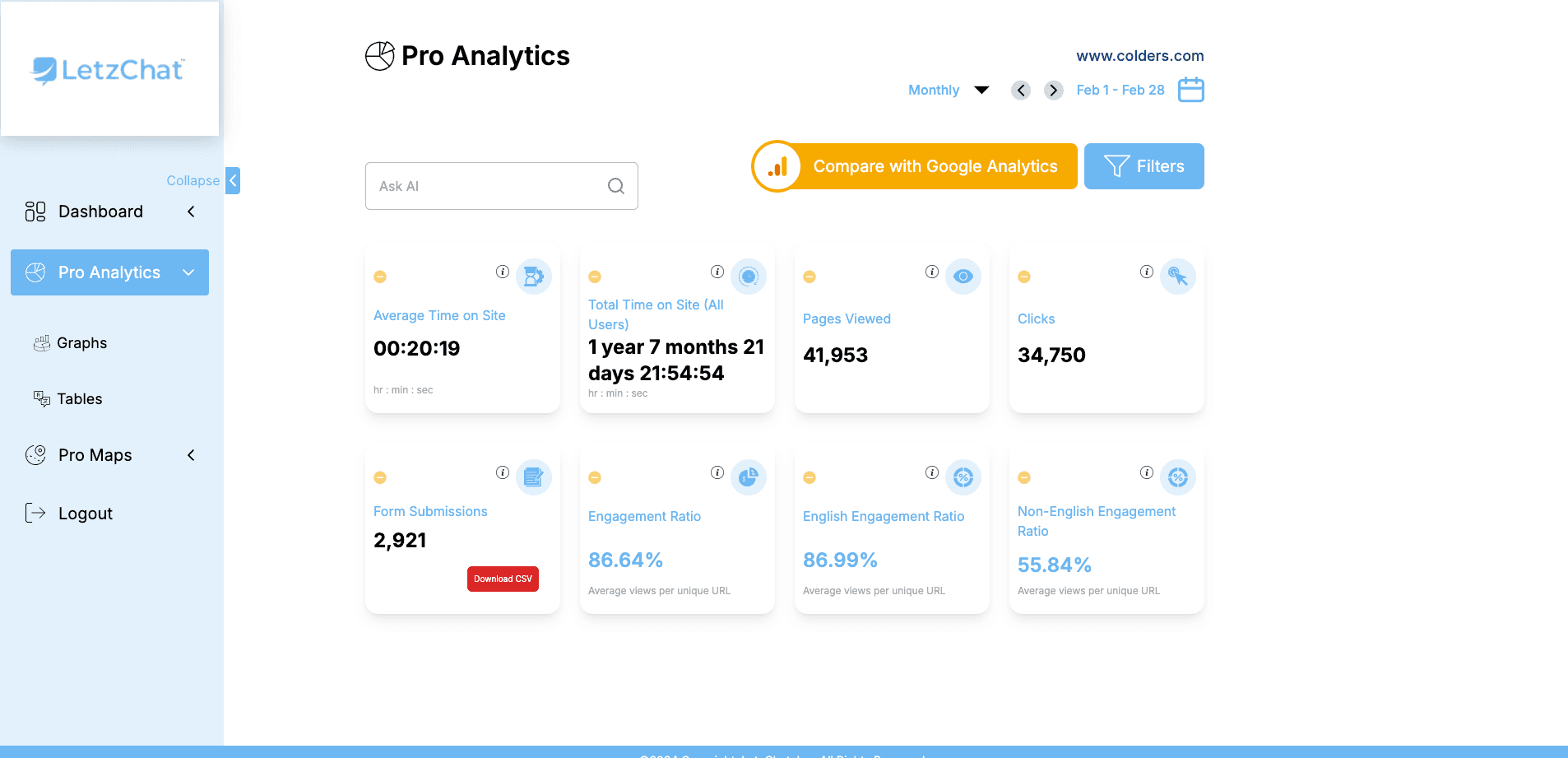
LetzChat – Enterprise Multilingual Translation & Communication Platform
Complete enterprise translation ecosystem — featuring real-time analytics (300M+ events/month), AI-powered chat, voice/video dubbing, live call translation, podcast/Zoom integration, glossary management, subtitle generation, and comprehensive analytics — breaking language barriers across all communication channels.
GenderRecognition.com: AI-Driven Gender Detection Solutions
State-of-the-art AI-powered gender detection platform processing images, videos, text, and voice data in real-time — built with privacy compliance, bias mitigation, and enterprise-level scalability. Includes comprehensive admin panel managing 2,800+ users and 33,000+ API calls.

AI Calling Agent with Admin Dashboard for Doctors
AI-powered healthcare communication platform combining an intelligent voice bot with an admin dashboard for appointment workflows, campaign control, and real-time call analytics.
Related Articles
GPTTranslator.co: Seamless Multilingual Translation Powered by AI
A case study on GPTTranslator.co, an AI translation platform built with Node.js and React that delivers context-aware multilingual translation, file-format preservation, and scalable API automation.
CASA App: A Revolution in Multilingual Social Networking
A case study on CASA App, a real-time multilingual social platform built with Node.js, Socket.io, React, and AWS to enable seamless cross-language communication.
AI-Powered Translation Platform: Breaking Language Barriers at Scale
How an enterprise AI translation platform was built to deliver high-accuracy multilingual translation across text, images, webpages, and documents with format preservation.