AI-Powered Translation Platform: Breaking Language Barriers at Scale
Introduction
Global organizations need fast, accurate, and secure translation workflows to operate across markets. Yet most translation systems still force a trade-off between quality, speed, and formatting integrity.
To solve this, I architected and developed an AI-powered translation platform designed for enterprise-scale multilingual communication across text, images, webpages, and documents.
The platform was built to preserve document structure, support large request volumes, and integrate cleanly with existing products through APIs.
Project Overview
This solution was designed as a comprehensive translation infrastructure layer rather than a single translation utility.
Core goals included:
- High translation accuracy across multiple languages
- Reliable performance under enterprise traffic
- Full format preservation for complex business documents
- Secure and compliant handling of sensitive content
- Flexible API-first integration for third-party systems
Key Achievements
Scalable Architecture
The platform backend was engineered to handle millions of translation requests per month while maintaining 99.9% uptime.
Format Preservation
Custom processing logic ensured strong formatting retention across:
- DOCX
- PPTX
- XLSX
This solved a common enterprise failure point where translated files lose layout quality.
Integration Flexibility
A developer-friendly REST API enabled easy integration into external products, internal business tools, and automation pipelines.
Enterprise Security and Compliance
The system was built with strong security controls and GDPR-aligned handling for document and user data.
Technical Deep Dive
Core Technology Stack
- Backend: Node.js and Express.js for high-throughput API services
- AI/ML Models: OpenAI, Gemini, and Llama for context-aware translation quality
- Document Processing: Mammoth.js, Pandoc, and LibreOffice for rich format handling
- OCR and Vision: Tesseract.js and Google Vision API for image/text extraction workflows
- Cloud Infrastructure: AWS S3 for secure storage and Cloudflare for global delivery
- Real-Time Layer: WebRTC-enabled collaboration capabilities
1. Hybrid Translation Engine
A hybrid engine was developed to combine automation with quality assurance:
- AI-generated initial translation
- Optional human review stage for high-stakes content
- Translation memory for context continuity
- Continuous feedback loops to improve output quality over time
This approach balanced speed, accuracy, and practical enterprise adoption.
2. Advanced Document Processing
The document pipeline supported:
- Batch translation workflows
- File-type-specific optimization
- Layout-aware preservation logic
- Cross-platform compatibility requirements
This made the system suitable for legal, operational, and marketing document workflows where formatting matters as much as language quality.
3. Real-Time Translation Capabilities
To support modern collaboration use cases, the platform included:
- Instant webpage translation
- Live collaboration workflows
- Dynamic translation updates
- Real-time job progress tracking
Performance and Business Impact
Measurable Outcomes
| Metric | Result |
|---|---|
| Translation Speed | 90% faster than traditional workflows |
| Accuracy | 95%+ across supported language pairs |
| Throughput | 1M+ words processed daily |
| Adoption | 50+ enterprise clients in the first quarter |
Cost and Efficiency Gains
- Up to 70% reduction in translation costs for enterprise clients
- Lower human review overhead through AI optimization
- Faster turnaround from automated batch processing
- Reduced operational friction via unified workflow tooling
Technical Challenges and Solutions
1. Format Preservation at Scale
Preserving output fidelity across mixed file formats required custom handling logic for each file class.
What was maintained:
- Complex PDF layout structures
- Excel table structures and cell relationships
- Word styling and content hierarchy
- PowerPoint visual structure and animation-aware content mapping
2. Performance Optimization
To keep latency and throughput in a stable range, multiple optimizations were implemented:
- Distributed caching
- Load balancing strategies
- Memory usage optimization
- Response time tuning for high-volume API traffic
3. Scalability Engineering
The platform was architected for continuous growth using:
- Microservices-oriented service boundaries
- Containerized deployment workflows
- Auto-scaling resource policies
- Cost-aware infrastructure utilization
Why This Project Matters
Translation is no longer a support feature. At enterprise scale, it is core infrastructure for market expansion, customer experience, and operational consistency.
This platform demonstrated how AI, cloud architecture, and strong engineering discipline can transform translation from a manual bottleneck into a strategic capability.
Future Roadmap
Current and planned enhancements include:
- Improved AI model orchestration for higher domain accuracy
- Additional file format support
- Expanded API capabilities for advanced workflows
- Broader language pair coverage
- Deeper real-time collaboration tooling
Conclusion
This project reflects end-to-end ownership of a complex, enterprise-grade product, from architecture and model integration to performance engineering and user-centric workflow design.
By combining scalable infrastructure, AI translation intelligence, and robust document fidelity, the platform enables organizations to communicate across languages with speed, precision, and confidence.
Related Projects

AI Calling Agent with Admin Dashboard for Doctors
AI-powered healthcare communication platform combining an intelligent voice bot with an admin dashboard for appointment workflows, campaign control, and real-time call analytics.
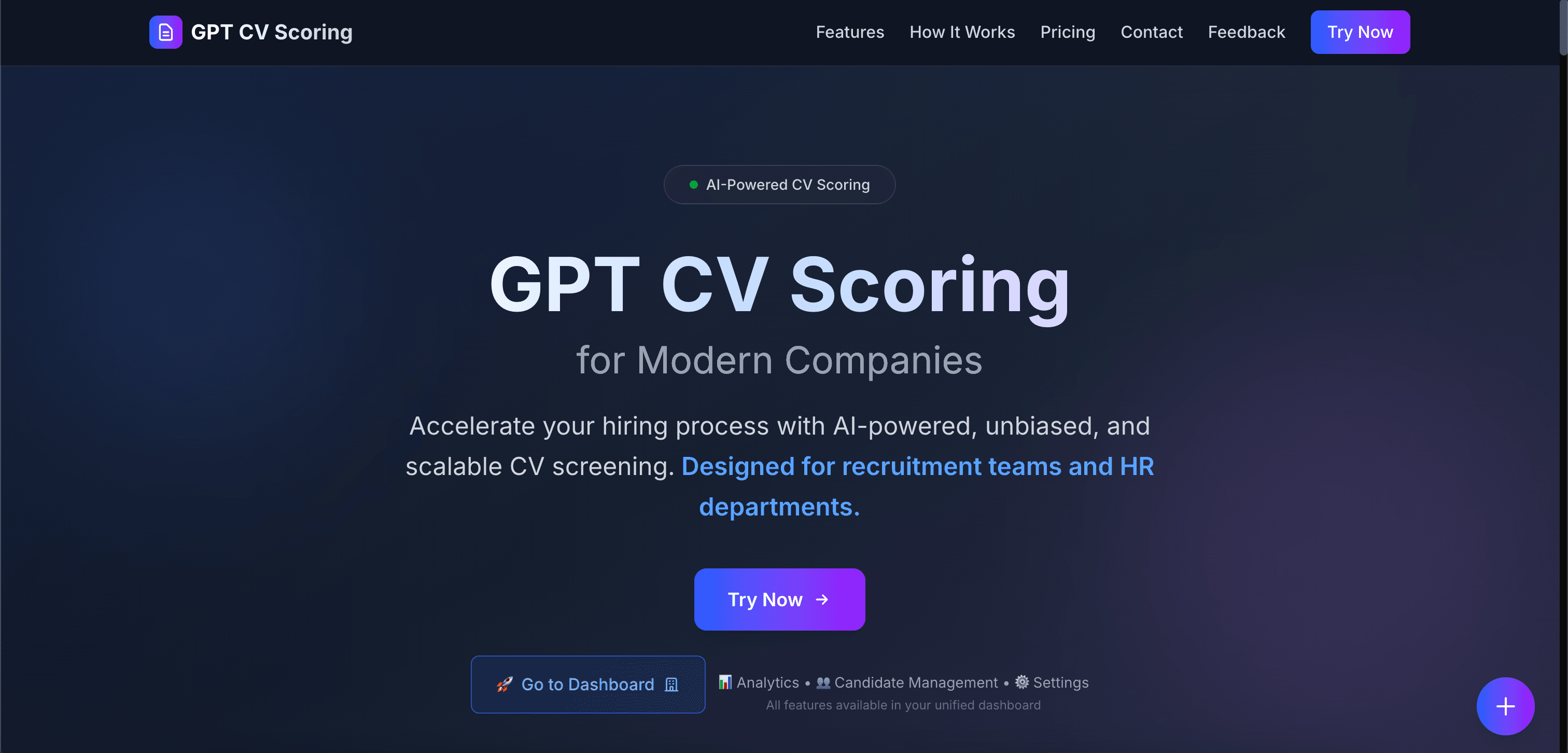
GPT CV Scoring - AI-Powered Recruitment Platform
Full-stack SaaS platform that automates CV screening with GPT-based scoring, candidate ranking, and analytics dashboards for modern hiring teams.
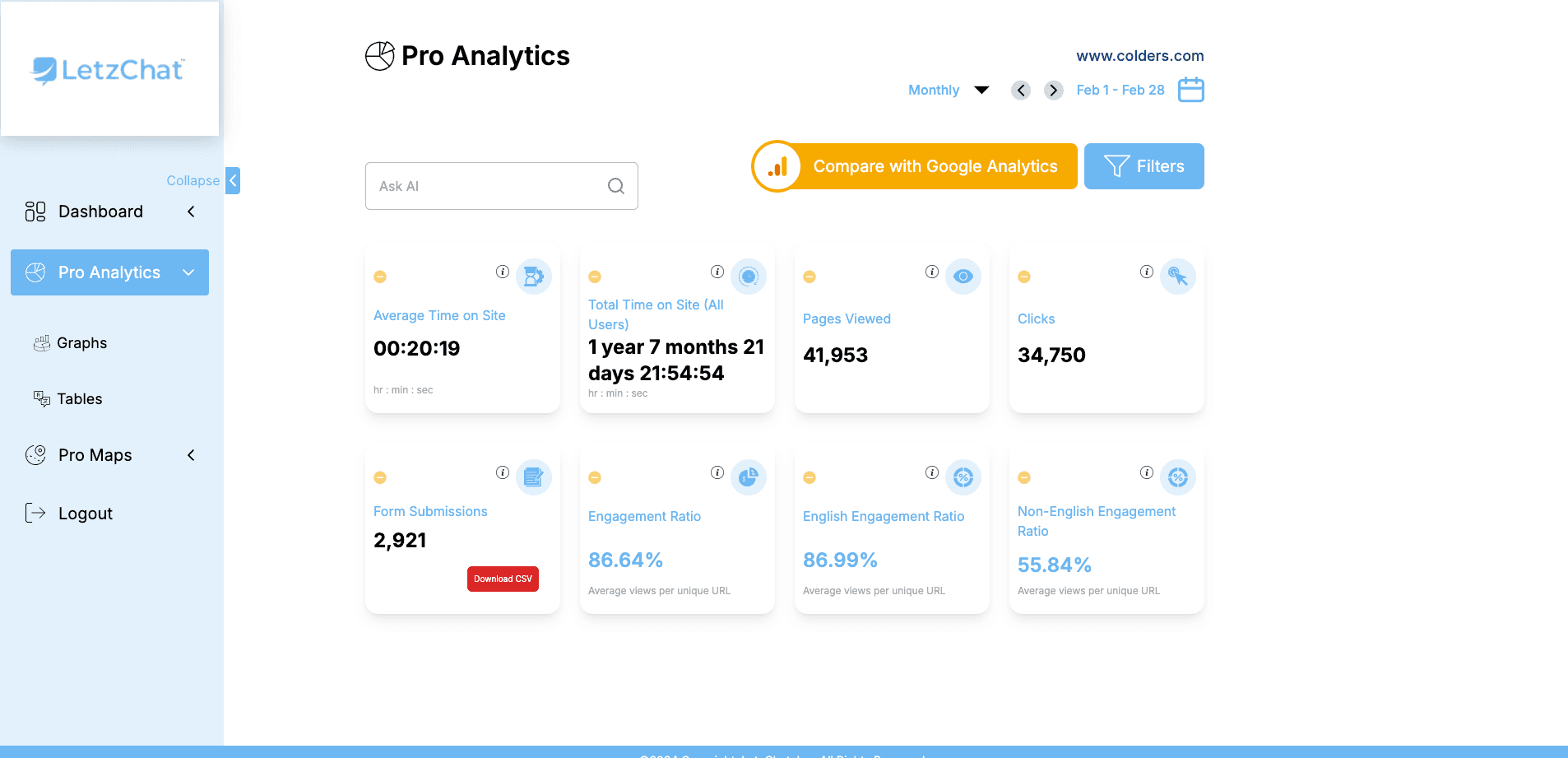
LetzChat – Enterprise Multilingual Translation & Communication Platform
Complete enterprise translation ecosystem — featuring real-time analytics (300M+ events/month), AI-powered chat, voice/video dubbing, live call translation, podcast/Zoom integration, glossary management, subtitle generation, and comprehensive analytics — breaking language barriers across all communication channels.
Related Articles
GPTTranslator.co: Seamless Multilingual Translation Powered by AI
A case study on GPTTranslator.co, an AI translation platform built with Node.js and React that delivers context-aware multilingual translation, file-format preservation, and scalable API automation.
GPT Translator Chrome Extension: AI-Powered Multilingual Translation
A case study on GPT Translator, a Chrome extension that delivers instant, context-aware translation for text, web pages, and technical files while preserving formatting and workflow speed.
CASA App: A Revolution in Multilingual Social Networking
A case study on CASA App, a real-time multilingual social platform built with Node.js, Socket.io, React, and AWS to enable seamless cross-language communication.