Client Payment Tracking System Using Vanilla JavaScript
Introduction
Payment tracking is a core workflow for freelancers, agencies, and service businesses. Even simple transaction logging can become hard to manage when done manually or across disconnected tools.
To solve this, I built a Client Payment Tracking System using only frontend technologies: HTML, CSS, Vanilla JavaScript, and localStorage.
The goal was to deliver a lightweight, cost-effective tool that records payments, tracks status changes, and keeps data persistent without requiring any backend infrastructure.
Project Overview
The project was developed as a fast MVP focused on practical business utility.
| Item | Details |
|---|---|
| Project Name | Client Payment Tracking System Using Vanilla JavaScript |
| Industry | Software Development / Application Engineering |
| Category | Software Development |
| Duration | 1 to 7 days |
| Cost | $200 |
| Role | Sole Developer and Creator |
| Stack | HTML5, CSS3, Vanilla JavaScript, localStorage |
The product was designed to help users quickly log incoming payments and visually monitor which transactions are pending versus confirmed.
The Core Challenge
1. Serverless Data Persistence
Most payment systems depend on backend databases. This project intentionally avoided server-side services, so data persistence had to be handled entirely in the browser.
2. Browser Reliability
While localStorage is broadly supported, reliability and behavior can vary based on browser conditions and storage limitations. Cross-browser testing was important to maintain consistent behavior.
3. Fast Visual Feedback
In transaction-heavy workflows, users need immediate status clarity. The interface had to make pending and confirmed payments instantly recognizable.
The Solution
I implemented a streamlined payment tracker built on client-side architecture with persistent local data and dynamic UI updates.
localStorage as the Data Layer
Payment entries are stored directly in localStorage with structured fields such as:
- Sender and receiver details
- Payment channel
- Amount and date
- Unique record ID
- Payment status
This removes hosting complexity while retaining session-to-session data persistence.
Real-Time Table Rendering
When a user submits the form, JavaScript updates the transaction table immediately without page reload. This keeps the interface fast and responsive.
One-Click Status Confirmation
Each row includes a direct action button such as "OK" or "Mark as Paid." When clicked, the status updates instantly and the row styling changes to reflect confirmation.
Clear Visual Differentiation
Pending and confirmed transactions use contrasting colors so users can scan records quickly and identify what still needs action.
Technology Stack
HTML5
- Semantic structure for form and table layout
- Standard form controls for payment input
CSS3
- Clean and responsive presentation
- Color-coded state feedback for transaction status
- Improved readability across desktop and mobile screens
Vanilla JavaScript
- DOM manipulation for instant data rendering
- Event handling for form submission and status updates
- Validation to block incomplete or invalid entries
- Lightweight architecture without framework overhead
localStorage
- Persistent browser-based storage
- Offline-capable behavior
- No backend setup required for core functionality
Key Features
- One-click payment confirmation
- Color-coded pending and paid statuses
- Intuitive form-based transaction entry
- Instant table updates after submission
- Persistent data across reloads and browser restarts
- Portable deployment with minimal setup
Impact
This system delivers practical value for small businesses and individual professionals:
Reduced Errors
Clear statuses and structured records reduce missed payments and manual mistakes.
Better Operational Visibility
Users can quickly assess transaction state through color and status labeling.
Lower Cost
No backend infrastructure means lower hosting and maintenance overhead.
Expandable Base
The architecture is simple but extensible, making it easy to add reminders, exports, analytics, or notification workflows later.
Development Reflection
This project reinforced several important engineering lessons:
- Minimal architecture can still deliver strong business value
- Good visual feedback is critical in transaction workflows
- localStorage can be highly effective for targeted MVP use cases
- Vanilla JavaScript remains a strong choice for lightweight, high-control frontend builds
Future Enhancements
Planned roadmap additions include:
- Payment reminder notifications
- CSV or PDF export support
- Search and filter improvements
- Optional cloud sync mode for multi-device usage
- Basic analytics dashboard for payment trends
Conclusion
The Client Payment Tracking System shows how a focused frontend-only solution can solve a real operational problem quickly and affordably.
Built in under a week and designed for clarity, speed, and persistence, it provides a practical payment tracking workflow for freelancers and small teams without the complexity of full backend infrastructure.
Related Projects

Client Payment Tracking System Using Vanilla JavaScript
This project is a lightweight client payment tracker built entirely in Vanilla JavaScript and HTML, leveraging localStorage for data persistence and fast, zero-backend deployment.
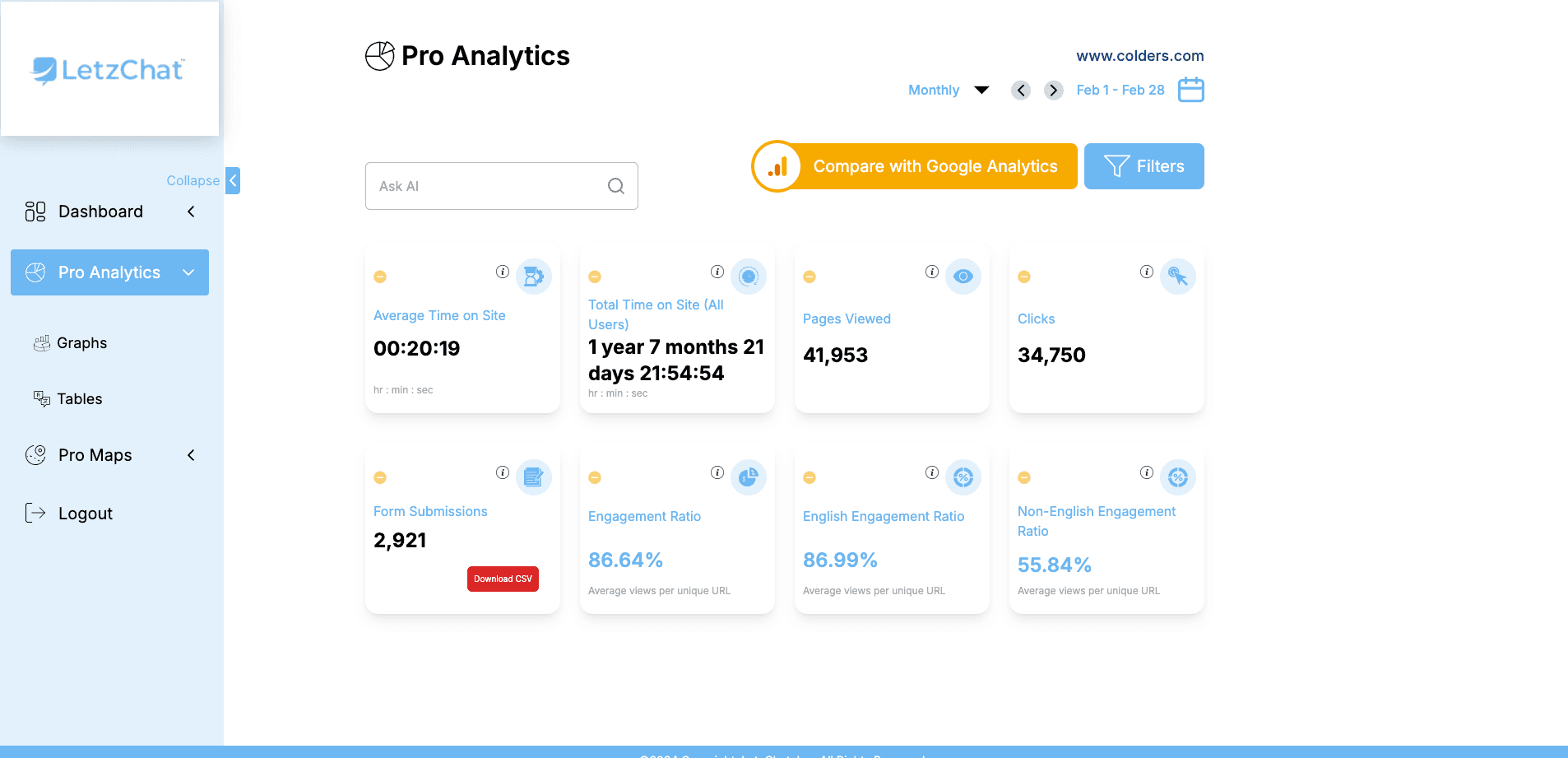
LetzChat – Enterprise Multilingual Translation & Communication Platform
Complete enterprise translation ecosystem — featuring real-time analytics (300M+ events/month), AI-powered chat, voice/video dubbing, live call translation, podcast/Zoom integration, glossary management, subtitle generation, and comprehensive analytics — breaking language barriers across all communication channels.

GenderRecognition.com: AI-Driven Gender Detection Solutions
State-of-the-art AI-powered gender detection platform processing images, videos, text, and voice data in real-time — built with privacy compliance, bias mitigation, and enterprise-level scalability. Includes comprehensive admin panel managing 2,800+ users and 33,000+ API calls.
Related Articles
GPT Translator Chrome Extension: AI-Powered Multilingual Translation
A case study on GPT Translator, a Chrome extension that delivers instant, context-aware translation for text, web pages, and technical files while preserving formatting and workflow speed.
Languages-Details NPM Package: Simplified Language Metadata at Your Fingertips
A case study on Languages-Details, an open-source NPM package that provides fast, structured language metadata for multilingual apps, localization workflows, and AI/NLP systems.
Revolutionizing Animal Welfare Management with a Custom MERN Stack Solution
A case study on the Animal Management System (AMS), a MERN and AWS-based platform that improved care scheduling, adoption workflows, and operational efficiency for animal welfare organizations.